
 By Shalom Insights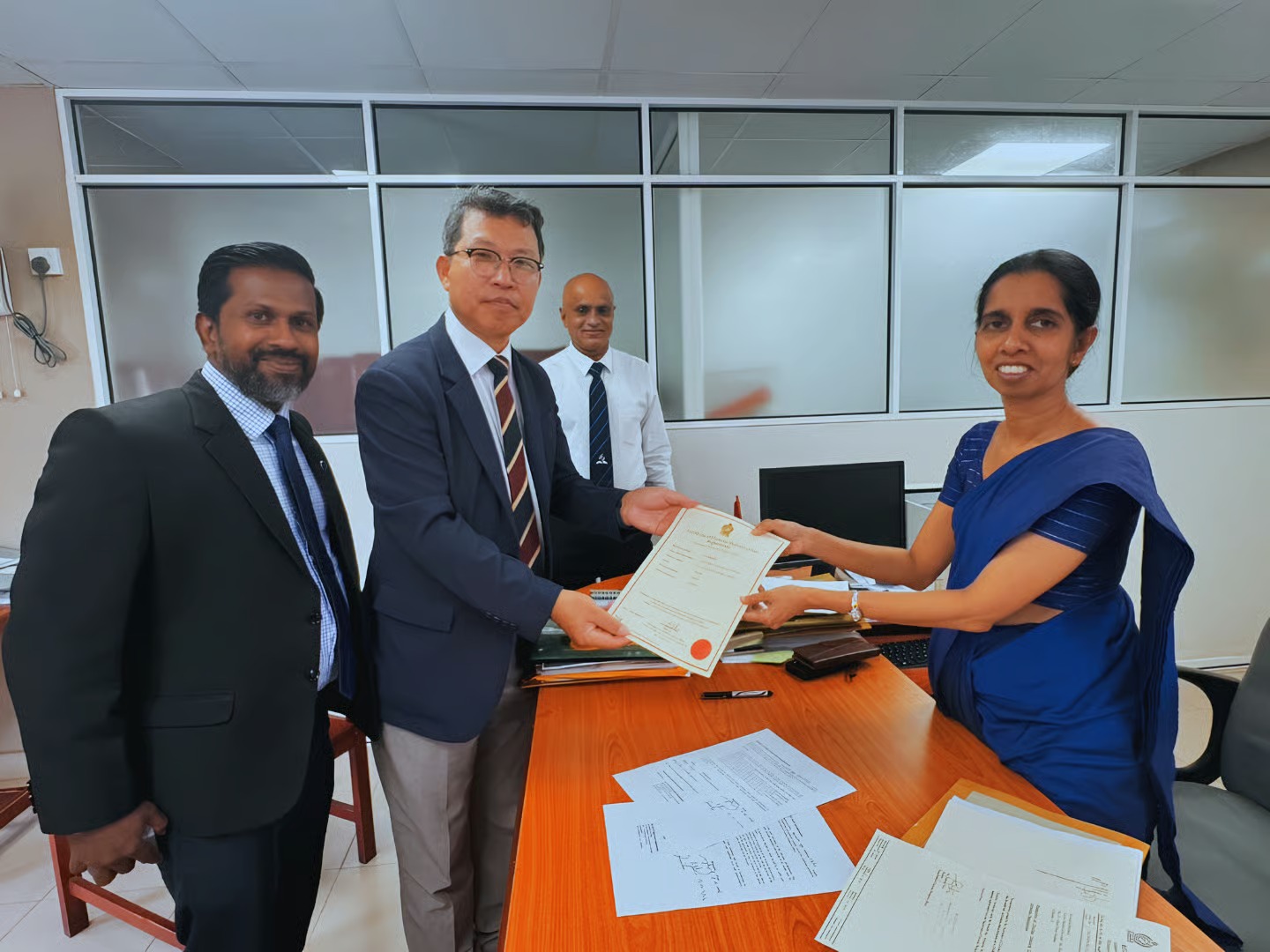
By Northern Asia-Pacific Division
After more than a century of ministry in Sri Lanka, the Seventh-day Adventist Church has achieved a historic milestone by receiving official recognition as a Christian denomination from the Department of Christian Religious Affairs under the Ministry of Buddhasasana, Religious and Cultural Affairs.
The recognition, granted in June, marks a significant step forward for the Church’s legal standing, ministry, and mission across the country.
The Adventist Church has maintained a continuous presence in Sri Lanka since 1904, serving communities through evangelism, education, health ministry, and humanitarian work. Today, its operations are overseen by the Ceylon Mission (CMS), formerly known as the Sri Lanka Mission.
Despite its 122-year presence, the Church had never been officially recognized as a registered Christian denomination. Instead, it operated under company registration, a status that presented several legal and administrative challenges.
Without official denominational recognition, the Church faced difficulties establishing new places of worship, securing legal protections and accessing benefits generally available to recognised religious institutions. In some instances, misconceptions about its legal status even led other Christian groups to question its legitimacy as a denomination.
The process that culminated in the Church’s recognition began in 2025 under the leadership of Northern Asia-Pacific Division (NSD) President Jung HyoSu, together with the division’s former executive secretary and former treasurer.
Following the election of new officers during the 2025 Constituency Session, NSD Executive Secretary Majintha Gunathilake and Treasurer Shiron Erinton Perera continued the process alongside Jung until the application was successfully approved.
A key figure throughout the process was E. M. U. S. K. Bandara, Director of Public Affairs and Religious Liberty for the Ceylon Mission. Bandara coordinated communication with government authorities and closely monitored the application as it progressed through the various stages, with support from the Northern Asia-Pacific Division.
Bandara described the recognition as the result of decades of prayer and perseverance.
“For 122 years, our church leaders repeatedly tried to register the Seventh-day Adventist Church as a separate Christian denomination, but every attempt was unsuccessful. This lack of recognition affected many areas of our ministry,” he said.
He explained that a 2014 property dispute involving the Deniyaya Seventh-day Adventist Church became a turning point in the Church’s efforts to gain official recognition. While seeking legal assistance over the attempted takeover of church property, Bandara established relationships with leaders in the Christian community and officials from the Department of Christian Religious Affairs.
“At first, it was a process of seeking help to address the immediate problem. However, through that experience, the Church gained a way to continue dialogue with government officials,” he recalled.
Over the following years, Bandara continued meeting with government officials in his capacity as Public Affairs and Religious Liberty director. During these engagements, he introduced them to the history, beliefs, and ministry of the Seventh-day Adventist Church while discussing the possibility of securing official recognition.
He also recalled a conversation with the director of the Department of Christian Religious Affairs.
“When I spoke about the possibility of registering our Church, the director explained that many applications had not been approved because they failed to meet the required qualifications. However, she said that if we submitted a complete application with all the necessary requirements, she would present it to the High Committee.”
With approval from the Ceylon Mission Executive Committee, the Church prepared and submitted the required documentation. The application subsequently underwent review by the High Committee, the Ministry of Religious Affairs, and several other government authorities before receiving final approval on June 19.
Bandara expressed gratitude to government officials, ministry staff, executive committee members, and everyone who contributed to the lengthy review process.
“We thank God for opening a door that had remained closed for more than a century. This recognition is the result of the efforts of the entire Church and a testimony to God’s leading.”
Church leaders say the recognition represents far more than an administrative achievement. It enables Seventh-day Adventist churches to be officially recognized as places of worship and qualify for benefits and concessions available to government-recognized religious institutions, including those related to utilities, duties, and other statutory privileges. It also provides the Church with a stronger legal foundation for future ministry.
The new status is expected to facilitate the establishment of additional places of worship, strengthen cooperation with government agencies and community organizations, and expand opportunities for church planting, community outreach, Hope Channel Sri Lanka, Adventist World Radio, educational institutions, and health ministries as the Church advances its 2026–2030 Strategic Plan.
 Ruth Dusingize