 By Ruth Dusingize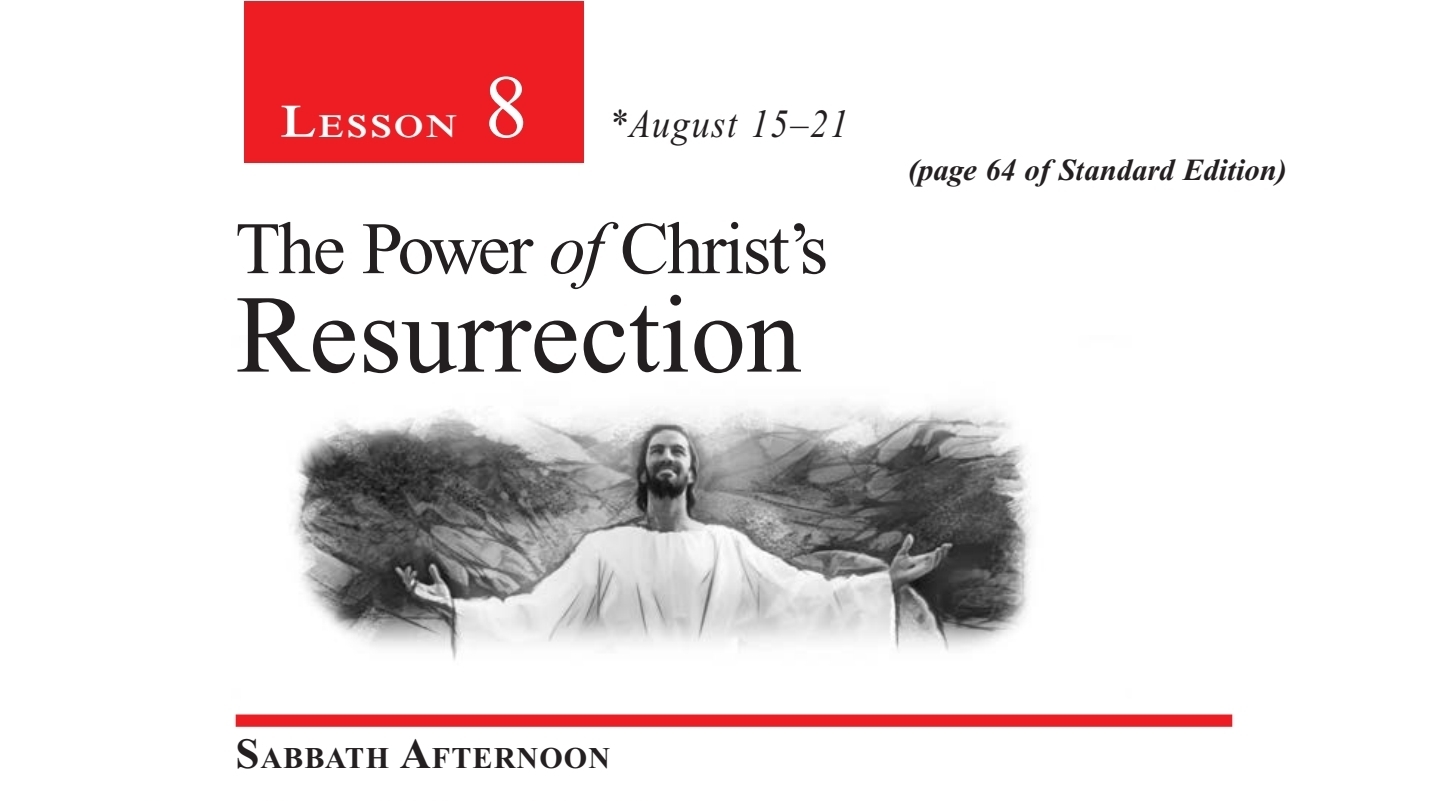
HIGHLIGHT: Amidst a society that doubted the resurrection of Jesus Christ, the Corinthian believers were at the verge of being misled with the false theories.
This week, we focus on the Centrality of the Gospel being the fact that Jesus Christ died, was buried and resurrected on the third day as emphasised by Apostle Paul.
In addition, we see how this truth affects the way a believer ought to live, holding fast onto the hope only found in Jesus Christ.
Memory Text: 1 Corinthians 15:14-17 NKJV
“And if Christ is not risen, then our preaching is empty and your faith is also empty….And if Christ is not risen, your faith is futile; you are still in your sins!”
SABBATH: INTRODUCTION
This week we reflect on Paul’s powerful defense of the resurrection in 1 Corinthians 15. Even in Corinth, some doubted that the dead could rise, influenced by human reasoning and the surrounding culture.
But Paul makes clear that the resurrection of Christ is not optional to the Christian faith—it is its very foundation. If Christ is not risen, there is no salvation, no victory over sin, and no lasting hope. But because Jesus lives, we have assurance, redemption, and the promise that He will return to raise His people and take them home.
SUNDAY: PROCLAIMING THE RESURRECTION OF CHRIST
When Adam and Eve sinned and lost the glory of God that covered them, God made for them cloths from a ram’s skin that symbolised that humanity could approach His presence only through Jesus Christ’s sacrifice.
Christ’s death and resurrection was a fulfilment of prophecy as was written by the Prophets like Isaiah and Jeremiah, as well as King David, the Psalmist.
In addition, Christ’s resurrection is a historical event that was publicly witnessed, therefore, denying it is highlighted as denial of One’s faith in God, as stated by Apostle Paul.
Furthermore, a true Christian boldly shares the Gospel to those around him.
(READ 1 Corinthians 15:1-8,11; Luke 24:44-48; Romans 1:1-4; 10:9&10; Psalms 2; Isaiah 7:14; 9;6; Jeremiah 23:5-6)
MONDAY: THE RISEN CHRIST, OUR ONLY HOPE!
Without Christ’s resurrection, believers would have no hope in the present, much less in the future. Contrary to the Pagan belief that suggested the continuity of the soul after death, Paul points the Corinthians believers to the truth of Christ’s death and resurrection.
Believers are true witnesses only when they uphold the fact that Christ died for our sins, was buried in the tomb and was raised.
Our faith isn’t empty because Jesus Christ rose from the dead and it is the reason why Paul tells Christians that they ought to stop living in sin-the result obtained from a transformed life upon beholding this truth.
(READ 1 Corinthians 15:12-19; John 8:32)
TUESDAY: CHRIST, THE FIRSTFRUITS
When Jesus Christ died, was buried and rose from the dead, this is the same truth symbolised when a believer is baptised, for he is immersed(buried) and comes out of the waters as a fresh being in Christ and receives the gift of salvation from eternal death through God’s grace by faith.
Hence, one can’t deny the reality of Christ’s resurrection. Furthermore, Jesus Christ was raised from the dead and He is the first one of all those who will be raised from the dead at His second coming and only through Him will they be raised from the dead.
(READ 1 Corinthians 15:20-32; Revelation 20:5&6; Romans 6:3&4; Colossians 2:12; 2 Timothy 1:12)
WEDNESDAY: THE RESURRECTED BODY
Just like sin came through one man, Adam, salvation came through one man, Jesus Christ. When Jesus Christ comes back, the righteous dead shall be resurrected and meet with Jesus in the sky together with the righteous living, all adorned in new bodies suited for heaven.
Just as we inherited Adam’s broken body, we will inherit Christ’s resurrected, glorified body. Ultimately, we will look less like Adam and more like Jesus-in glory, strength and a Spirit-filled life. Futhermore, resurrection means being clothed in immortality, not just surviving death, but being made gloriously whole.
(READ 1 Corinthians 15:36-44; Philippians 3:21)
THURSDAY: FINAL VICTORY OVER DEATH
Paul’s derision of death and his assertion of victory is in the present tense, the final victory awaits the return of Christ when those who belong to him will be raised.
In other words, Paul contemplates death’s defeat in the light of resurrection day. Paul makes the point that the law revealed sin and so showed that humanity was condemned, thus giving sin its power.
Without Christ, sin leads to death and judgment. With Christ, sin is forgiven, and death is defanged. Thus, the resurrection isn’t just theology, rather, it’s a reason for worship, for hope, and for fearless living.
(READ 1 Corinthians 15:54-57; 1 Thessalonians 4:13-17)
FRIDAY: FURTHER THOUGHT
The divinity of Christ is the believer’s assurance of eternal life. ‘He that believeth in Me,’ said Jesus, ‘though he were dead, yet shall he live: and whosoever liveth and believeth in Me shall never die.
Believest thou this?’ Christ here looks forward to the time of His second coming. Then the righteous dead shall be raised incorruptible, and the living righteous shall be translated to heaven without seeing death.
The miracle which Christ was about to perform, in raising Lazarus from the dead, would represent the resurrection of all the righteous dead.
(READ “God’s People Delivered”, pp.635-652 in The Great Controversy; The Desire of Ages, p.530; The Story of Redemption, pp.411&412)
DISCUSSION QUESTIONS;
- What reasons do we have for believing in Christ’s resurrection? Also, what other things, secular or sacred, do we believe even if we haven’t seen them ourselves?
- How does one make sense of 1 Corinthians 15 if the dead soar off to heaven (or to hell) immediately? Why, then, is understanding that the dead sleep such an important teaching?
- How does the assurance that our bodies will be transformed into perfection help us be resilient regarding our physical limitations today?
- Who hasn’t bemoaned how quickly life passes us by? In our own experience, that’s how quickly the second coming of Jesus will seem. Perhaps our first thought at His return will be “Wow, Lord, Your coming really was soon!” How does this idea help us better come to terms with what is seen as “the delay”?
- Think about those who were eyewitnesses to Christ’s resurrection (Acts 1:22, Acts 2:32, Acts 3:15, Acts 4:33, Acts 5:30–32). How can we, about two thousand years after that event, be “witnesses” of His resurrection?